

Neither construction wins outright. Hybrids favor airflow, lift, and edge support; all-foam favors deep contouring and motion isolation — but the honest answer is that foam density, coil gauge, firmness, and your own body matter far more than the label on the box. In a 2003 randomized crossover of 313 adults with chronic low-back pain published in The Lancet (Kovacs et al.), medium-firm support beat firm — proof that fit, not category, drives results.
Key takeaways
- Neither is universally "better." Hybrids lead on cooling airflow, lift, and edge support; all-foam leads on deep contouring and motion isolation.
- Specs beat the label. A low-density hybrid can sag faster than a high-density all-foam bed — compare foam density and coil gauge, not the word on the tag.
- Most hybrid sleep studies are small, industry-sponsored, and pre-post — subjective comfort gains are real, but objective sleep changes are mixed.
- Off-gassing is material-driven, not category-driven. Certifications and a fiberglass-free build matter more than foam vs. coils.
- Quick sort: hot sleepers, heavier bodies, edge-support seekers → hybrid; pressure-relief, motion-sensitive, value-first side sleepers → all-foam.
What's the actual difference between an all-foam and a hybrid mattress?
An all-foam mattress uses stacked foam layers for both cushion and support; a hybrid pairs foam comfort layers on top with a coil spring support core underneath. That single structural split — foam-only support versus foam-plus-coils — drives almost every difference in feel, temperature, and edge stability that follows.
According to the Sleep Foundation's mattress-construction guide, hybrids pair a coil-based support core with a thick comfort system, while memory foam mattresses typically use a high-density polyfoam core instead. As the guide puts it: "While memory foam mattresses typically contain a high-density polyfoam core, hybrids use a coil system."
Here's the nuance most comparison articles skip: "all-foam" is not one feel. It covers memory foam (slow, sinking contour), latex (bouncier, more responsive), and polyfoam blends — three very different beds under one label. So "foam vs. hybrid" is a starting point, not a spec sheet.
Coils are what add the airflow, lift, and perimeter strength buyers associate with hybrids. Nest & Wild's Luxury Hybrid delivers those coil benefits in a genuinely fiberglass-free, CertiPUR-US build — a distinction worth flagging early, since many boxed hybrids still rely on a fiberglass fire barrier.

How do all-foam and hybrid mattresses compare at a glance?
Across feel, temperature, motion isolation, edge support, and durability, each construction trades one strength for another. The table below maps who each favors — every cell labels a trade-off, not a universal winner.
| Dimension | All-foam | Hybrid | Best for |
|---|---|---|---|
| Support core | High-density polyfoam | Coil unit + foam comfort layers | Coils suit those wanting lift; foam suits those wanting an even feel |
| Feel / contouring | Deeper hug, sinks in | More lifted, "on top" of the bed | Contour seekers → foam; responsive-feel seekers → hybrid |
| Temperature / airflow | Traps more heat (esp. thick memory foam) | Coil core moves air more freely | Hot sleepers → hybrid |
| Motion isolation | Damps movement locally | Coils transmit more rebound | Light-sleeping couples → foam |
| Edge support | Softer perimeter unless reinforced | Coils resist edge compression | Sit-on-the-edge / bed-sharers → hybrid |
| Responsiveness | Slower to rebound | Bouncier, easier to reposition | Combo movers → hybrid |
| Durability driver | Foam density | Coil gauge + foam density | Compare specs, not the label |
| Off-gassing driver | Foams, adhesives, cover | Same — materials, not coils | Sensitive noses → check certifications |
| Value tier | Often lower upfront cost | Usually priced higher | Value-first → foam; feature-first → hybrid |
This head-to-head framing is exactly what independent testers at RTINGS reach in their construction breakdown: foam feels more static and isolates motion, while hybrids feel bouncier and easier to move on. The sections below unpack each row with the evidence behind it.
Which is better for chronic lower back pain, all-foam or hybrid?
Neither by category — medium-firm support and neutral spinal alignment matter far more than whether the bed uses coils or foam. In the 2003 Lancet randomized crossover (Kovacs et al., n=313), a medium-firm mattress improved pain and disability more than a firm one in people with chronic low-back pain. Note that trial tested firmness, not construction — so it argues for the mattress that best holds a neutral spine, not for foam or coils specifically.
The trade-off is body-dependent. A sleeper who needs easier movement and more lift often does better on a hybrid; one who needs deeper contouring around the lumbar curve may prefer foam. Because chronic back pain is heterogeneous, body weight and sleep position swing the answer more than the label does.
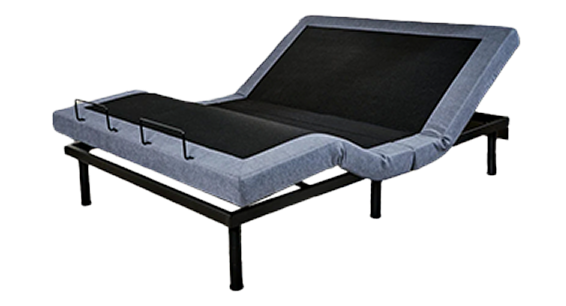
Bottom line: pick for alignment and firmness first. If you shift positions or share the bed and want to fine-tune the angle of your back and legs, pairing either mattress with the Adjustable Base lets each sleeper dial in a spine-neutral position. Our mattress firmness guide walks through matching firmness to your weight and position.
This is general education, not medical advice — talk to a clinician about persistent back pain.
Which sleeps cooler — foam or a coil hybrid?
A coil hybrid usually runs cooler because the spring core is open and ventilated, moving air under the sleeper, while thick foam layers trap body heat. Cooling foams and gels narrow the gap, so build still matters — a hybrid buried under dense foam can sleep warm too.
The strongest data here is a caveat-heavy 2025 field study. In a 10-week in-home pre-post study of 35 adults published in Sleep (2025 abstract), sleeping on a hybrid was associated with a +103% jump in perceived coolness and +120% in pressure relief (all p<.001) — but objective sleep tracking did not significantly improve. Read that honestly: it's a small, industry-sponsored, non-randomized study where subjective comfort gains outran measured sleep change.
A separate 2023 Sleep abstract (Lee, n=39) of self-identified hot sleepers found a hybrid associated with +14 minutes total sleep time (p=.002) and +6 minutes REM (p=.004) — again association within a pre-post design, not proof of cause.
The mechanism is the takeaway: airflow beats insulation for heat. If you sleep hot, a hybrid's coil core plus breathable bedding — like our Enhanced Bamboo Sheets — does more than a foam bed with a "cooling" cover claim. Our deeper explainer on how hybrids improve airflow covers the build details.
As a side sleeper, will foam or a hybrid give better shoulder and hip pressure relief?
Foam usually wins for side sleepers — it contours more closely at the shoulders and hips, spreading body weight across the pressure points, while hybrids feel more lifted and responsive. Be honest about the evidence tier, though: this is construction-based expert consensus, not head-to-head clinical trials of side-sleeper pressure relief.
Individual preference is real and stubborn. In an older experimental study of 9 subjects published in Sleep (Bader, 2000), four slept significantly better on the softer mattress and two preferred the firmer one — and subjective ratings didn't consistently match recorded sleep metrics. The sample is tiny, but the lesson holds: there's no single "correct" surface for every side sleeper.
Who this points to: light-to-average side sleepers whose top priority is pressure relief and a deep, cradling hug are usually best served by an all-foam bed. If that's you, our all-foam Original Mattress is the honest recommendation — we'd rather point you to the right fit than the pricier bed. It's fiberglass-free, CertiPUR-US, GreenGuard Gold, and OEKO-TEX certified, built in Tupelo, Mississippi.
Which type has better motion isolation for couples?
All-foam generally isolates motion better because foam compresses and absorbs movement locally, while coils transmit more rebound across the surface. If your partner's midnight turns wake you, foam is the safer default — a point RTINGS makes in describing foam's static feel versus a hybrid's bounce.
Here's the mid-article surprise most guides miss: price tier changes the verdict. At the same budget, a foam bed usually out-isolates a hybrid — but quality pocket coils close the gap at higher price points, because each coil is wrapped and moves independently instead of transmitting energy across the unit. So "foam always isolates better" is only true when you compare like-for-like value. A well-built pocket-coil hybrid can hold motion nearly as well as foam.
- Best foam pick: light-sleeping couples on a value budget who prioritize a dead-still surface.
- Best hybrid pick: couples who also want cooling and edge support and are buying at a higher tier where pocket coils shine.
Our motion-isolation guide for couples digs into how pocket-coil design affects partner disturbance.
Which mattress lasts longer before sagging, all-foam or hybrid?
It depends on foam density and coil gauge, not the category label — a low-density hybrid can sag faster than a high-density all-foam bed. The popular claim that "hybrids always last longer" doesn't survive contact with the specs.
There's a real mechanism behind the hybrid-durability argument: a coil core can carry structural load that would otherwise compress foam, so, when comfort layers are similar, hybrids can resist deep body impressions better. Some retailers cite figures like 8–12 years for hybrids versus 6–8 for foam — treat those as secondary, anecdotal ranges, not primary evidence, since no controlled durability study in the research supports a hard number. What is well established is the failure mode: weak, low-density foams develop impressions regardless of whether coils sit beneath them.
Actionable buyer rule: ignore the label and read the build. Ask for foam density and coil specs, and treat vague "premium" language as a non-answer. Our no-regret mattress buying guide gives you the exact spec questions to ask before you commit.
I'm a heavier sleeper — will all-foam bottom out, or do I need coils?
All-foam doesn't automatically bottom out; foam density, thickness, and firmness decide it — but a well-built hybrid gives heavier bodies more lift and edge stability. Excessive sink is a build-quality problem, not an all-foam rule.
Firmer, higher-density foams with enough total height support heavier sleepers without the "pressing through to the base" feeling. Softer or lower-density constructions are where heavier bodies tend to sink too far — and that can happen in a foam bed or a cheaply built hybrid. As the Sleep Foundation notes, support comes from the core and layer quality, so the resilient coil unit in a hybrid adds a more supportive, lifted feel that many heavier sleepers prefer.
Where a hybrid earns its keep for heavier bodies: stronger edge support (more usable surface, easier to sit and rise) and a bouncier core that resists the deep-sink sensation. If that's your priority, the coil-supported Luxury Hybrid is the natural fit — lift and edge stability in a fiberglass-free, certified build.
Do all-foam mattresses off-gas more than hybrids, and how long does the smell last?
Off-gassing is material-dependent, not category-dependent — it comes from foams, adhesives, and cover treatments, and typically fades over days to a couple of weeks with ventilation. A hybrid is not automatically lower-odor, and an all-foam bed is not automatically higher-odor; the chemistry of the specific materials decides it.
The "new mattress smell" is strongest right after unboxing and diminishes as the bed airs out in a ventilated room. The EPA's guidance on indoor air quality and VOCs is the useful frame here: emissions come from the materials in a product, and ventilation lowers concentrations. A sharp, persistent, or irritating odor — especially with eye, nose, or throat irritation that doesn't improve — is a signal to stop and check the materials, not to wait it out.
There's a bigger safety layer buried inside many boxed mattresses: the fire barrier. The Consumer Product Safety Commission sets federal mattress flammability rules, and some manufacturers meet them with a fiberglass barrier under the cover — which can shed if you unzip the cover. That's exactly why Nest & Wild is genuinely fiberglass-free across every model, foam or hybrid.
Which certifications prove a foam or hybrid is non-toxic?
Match the certification to the component — no single label certifies the whole mattress. GREENGUARD Gold covers finished-product emissions, CertiPUR-US covers foam, OEKO-TEX covers textiles, and GOLS/GOTS cover organic latex and fabric. If a brand says "non-toxic" but cites only one, ask which part of the bed it actually applies to.
- GREENGUARD Gold — verifies low chemical emissions from the finished product into indoor air. Best fit when your priority is what you breathe.
- CertiPUR-US — certifies the polyurethane foam for content and emissions (no certain flame retardants, low VOCs).
- OEKO-TEX — screens textile components for a list of harmful substances. A material-safety signal, not an organic or whole-mattress claim.
- GOLS / GOTS — the Global Organic Latex and Textile Standards, relevant only if the bed uses certified organic latex or organic fabric.
Here's the first-party fact that settles the question for our beds: every Nest & Wild mattress is genuinely fiberglass-free, uses CertiPUR-US foams and GreenGuard Gold–certified glue, and is OEKO-TEX certified — built in Tupelo, Mississippi. If certification scope is your deciding factor, you can compare the full lineup of fiberglass-free mattresses and read the certs on each.
Are American-made mattresses better quality than imported ones, and how can you tell?
Country of origin isn't a quality guarantee — foam density, coil gauge, transparent specs, and third-party certifications tell you far more than a "Made in USA" label. A domestic bed with weak foams can underperform a well-built imported one, and vice versa.
Two traps to watch. First, a mattress marketed as American-made can still use imported components or offshore-sourced raw materials, so a claim should map to what's actually built where. Second, vague marketing language — "premium," "hotel quality," "medical-grade" — without published specs doesn't let you compare anything. Treat those as red flags, not selling points.
The reliable test is transparency: verify foam density, coil specs, and a materials list; confirm credible certifications; and check that the warranty matches the expected lifespan. That's the difference between transparent manufacturing — a disclosed Tupelo, Mississippi build with named certifications — and gloss. Our review of whether American-made mattresses are worth it breaks down what to verify before you trust the label.
Is a hybrid worth the extra cost over an all-foam mattress?
A hybrid earns its price if you value cooler sleep, easier movement, or stronger edges; if not, all-foam is often the better value for pressure relief and motion isolation. The decision is about which trade-off fits you, not which tier is "nicer."
Hybrid queen prices generally run higher than comparable all-foam beds, so frame the premium honestly: you're paying for airflow, lift, and perimeter strength from the coil core. If those aren't your priorities, that money buys nothing you'll feel. The 2025 Sleep field study (n=36) is a useful reality check: hybrid sleepers reported broad subjective gains (all p<.001), yet objective sleep tracking showed no significant change — comfort you can feel, but not a guaranteed measurable sleep upgrade.
Kids' rooms and guest beds: all-foam is usually plenty. It's quieter, pressure-relieving, and lower cost upfront — a good match for a bed used intermittently or by different body types. Pay up for a hybrid only if the room sees frequent use or the sleeper wants airflow and edge support.
Who is each mattress NOT for?
Skip a hybrid if you want max deep hug and motion isolation on a budget; skip all-foam if you sleep hot, are heavier, or dislike the sink-in feel. Honest fit beats a blanket recommendation every time.
A hybrid is NOT for you if:
- You're a light-to-average side sleeper who wants a deep, enveloping hug at the shoulders and hips.
- Top-tier motion isolation on a value budget is your #1 requirement.
- You prefer a still, quiet, "sink-in" surface over bounce and lift.
All-foam is NOT for you if:
- You sleep hot and dense foam layers make you overheat.
- You're a heavier sleeper who wants lift and strong edge support rather than sink.
- You sit on the edge often or dislike the feeling of being cradled into the bed.
The verdict: who should buy which?
Hot sleepers, heavier bodies, edge-support seekers, and mixed-position couples lean hybrid; pressure-relief, motion-sensitive, and value-first side sleepers lean all-foam. Here's the crisp two-path call based on everything above.
| You are… | Buy | Because |
|---|---|---|
| Hot sleeper, heavier body, edge-support seeker, or mixed-position couple | Luxury Hybrid (add the Adjustable Base for back-pain alignment) | Coil core moves air, adds lift, and resists edge compression |
| Light-to-average side sleeper, motion-sensitive couple, or value-first buyer | Original Mattress | Deeper contouring for pressure relief and better motion isolation for the price |
Whichever path fits, the material safety is the same: both are genuinely fiberglass-free, CertiPUR-US, GreenGuard Gold, and OEKO-TEX certified, and both are built in Tupelo, Mississippi. Still deciding on firmness or airflow? Compare the whole lineup and see all fiberglass-free mattresses side by side before you commit.

Frequently asked questions about all-foam vs hybrid mattresses: which is better?
Is a hybrid mattress better than memory foam?
Not universally. Hybrids feel cooler, more responsive, and offer stronger edge support; memory foam offers deeper contouring and better motion isolation. The right choice depends on your body, sleep position, and temperature — and on the specific foam density and coil quality, not the category name.
Do hybrid mattresses really sleep cooler than all-foam?
Usually, yes — the open coil core moves air more freely than a solid foam core. A 2025 Sleep field study (n=35) found hybrid sleepers reported large perceived coolness gains, though it was small and industry-sponsored. A hybrid buried under thick foam can still sleep warm, so build matters.
Which type is better for heavier sleepers?
A well-built hybrid often suits heavier bodies better, adding lift and stronger edge support. But all-foam works too if it uses firmer, higher-density foams with enough height. Excessive sink is a build-quality issue, not an all-foam rule — check foam density and coil specs.
Is an all-foam mattress fine for a kids' room or guest bed?
Usually, yes. All-foam is quieter, pressure-relieving, and lower cost upfront, which fits a bed used intermittently. Pay more for a hybrid only if the room sees frequent use or the sleeper wants airflow and edge support.
How long does the new-mattress smell last?
The odor is strongest right after unboxing and typically fades over days to a couple of weeks with good ventilation, per EPA indoor-air guidance. Off-gassing is material-driven, not category-driven. A sharp, persistent, or irritating smell is a signal to check the materials and certifications. Adequate sleep matters for health, per the CDC — so air out a new bed properly before nightly use.