

For most buyers, the answer is yes—but not for the reason the scary headlines suggest. Fiberglass itself is inexpensive and stays harmless while it's sealed inside an intact mattress cover. What you're paying extra to avoid is a documented failure mode: airborne fibers if the cover tears or gets unzipped, a "do not remove cover" rule you can never break, and a home cleanup that can cost hundreds. In a NapLab analysis of 410 mattresses, about 7.8% (32 mattresses) contained fiberglass—uncommon, but you can't assume yours is fine.
Key takeaways
- Fiberglass is safe while sealed inside an intact cover, but a genuine irritant if the cover is opened, torn, or damaged.
- About 7.8% of mattresses (32 of 410 analyzed) contain fiberglass; 89.5% were confirmed fiberglass-free (NapLab).
- The strongest human-harm evidence (pulmonary fibrosis) comes from occupational high-dose exposure—not normal mattress ownership.
- A "do not remove cover" warning and the terms "glass fiber" or "glass wool" are the clearest red flags.
- CertiPUR-US, GreenGuard Gold, and OEKO-TEX certifications plus a written answer from the brand are how you verify, instead of trusting label claims.
Are fiberglass-free mattresses worth the extra cost?
Yes for most buyers—you're paying to eliminate a real containment-and-cleanup risk, not a hyped danger. Fiberglass is safe sealed but a nightmare once exposed. The honest case for spending more rests on three concrete things: the chance a cover tears or gets unzipped, the cost of cleaning escaped fibers out of a home, and the practical rule that you can never remove your cover to wash it.
What you should not do is buy out of panic. As Sleepopolis puts it, fiberglass "is not inherently dangerous and should pose no risk to your health and safety as long as it stays inside your mattress." The strongest evidence of serious lung harm comes from heavy workplace exposure, not from ordinary mattress use. So the value of going fiberglass-free is about removing a gamble and buying peace of mind—accurate framing that still favors fiberglass-free for families and anyone who'll ever open a cover. The proof, the prevalence numbers, and how to verify safety are below.

What is fiberglass and why is it in mattresses?
Fiberglass is spun glass fiber used as an inexpensive fire barrier. Under heat it softens and fuses into a protective layer that chars instead of feeding the flame, which helps a mattress pass federal open-flame flammability tests without chemical retardants. Manufacturers reach for it because it's the lowest-cost path to meeting that fire standard.
According to Naturepedic, the material is woven into a sock layer beneath the cover, where it sits between you and the flammable foam. The trade-off: a barrier that only stays safe as long as it stays contained. Poison Control explains plainly that "fiberglass is often used by mattress manufacturers to meet fire safety standards" and "may be present in mattress foam or covers."
There are three other ways a mattress can meet fire codes:
- Chemical flame retardants: compounds that slow ignition, but raise off-gassing and emissions questions for some buyers.
- Natural wool or rayon barriers: naturally flame-resistant materials that brands usually disclose proudly because they're a selling point.
- Engineered fiberglass-free barriers verified by certification: the approach used by brands built to avoid the issue entirely, like the genuinely fiberglass-free mattresses made in Tupelo, Mississippi.
Bottom line: fiberglass does a real job—it's the cleanup risk if it escapes, not the barrier itself, that's the problem. A more breathable, well-built mattress design can hit fire safety without that gamble.
How common is fiberglass in mattresses?
About 7.8% of mattresses contain fiberglass—32 of 410 analyzed—while the large majority were confirmed fiberglass-free. It concentrates in inexpensive memory foam, not across the whole category, but you still can't assume any given mattress is clear without checking.
The NapLab analysis of 410 mattresses breaks down cleanly:
- 7.8% (32 of 410) contained fiberglass.
- 89.5% (367 of 410) were confirmed fiberglass-free.
- 2.7% (11 of 410) were unclear.
The category is also moving in a safer direction. The same analysis notes that Leesa stopped using fiberglass in September 2023, switching to a rayon barrier—a sign that consumer pressure is pushing brands away from it. Still, "most mattresses are fine" is not the same as "yours is fine," which is exactly why verification matters more than averages. If the volume of conflicting claims has you confused about how to choose the right mattress, the checklist further down narrows it fast.

Is fiberglass in a mattress actually dangerous?
Fiberglass is safe sealed inside an intact cover, but it becomes a genuine hazard if the cover is unzipped, torn, or damaged—releasing irritating airborne fibers. The danger is about exposure to escaped fibers, not the quiet presence of fiberglass behind an undamaged cover.
"Breathing in tiny pieces of fiberglass can irritate the nose, throat, and lungs and cause breathing problems." — California Department of Public Health
Short-term effects: skin, eyes, and airway irritation
The most common effects are immediate and physical. The California Department of Public Health states that contact with fiberglass can irritate the eyes and skin, and breathing in tiny pieces can irritate the nose, throat, and lungs. Poison Control reports that health effects "can include eye injuries, skin irritation, and lung disease," and notes "human exposures to fiberglass can occur when mattress covers are unzipped or removed." Short-term inhalation of airborne fibers may cause lung inflammation. As the Indoor Doctor describes it, fiberglass "irritates wherever it physically lands—skin, eyes, and the upper airway," and "those effects are real, common, and usually ease once the source is gone."
Long-term effects: what the evidence does and doesn't show
Serious long-term lung disease is documented—but the human evidence comes from heavy workplace exposure, not from sleeping on a mattress. A 2009 cross-sectional study in BMC Public Health of 102 glass-microfiber workers compared with 76 office controls found more respiratory and skin symptoms among exposed workers, including an adjusted odds ratio of 2.04 for cough. An older study of appliance workers exposed to fine fiberglass, Enterline et al. (1992) in the American Journal of Industrial Medicine, reported irregular opacities and small-airways obstruction on imaging and lung tests.
Both are occupational, high-dose exposure—not proof that owning a fiberglass mattress causes lung disease. Being honest about that gap is the point: a 2022 study in the International Journal of Environmental Research and Public Health found no fiberglass on the outer surfaces of brand-new mattresses, yet concluded that fiberglass and other flame-resistant fibers can pose a potential health risk "if not adequately contained." Containment is the whole ballgame.
The "do not remove cover" trap and cleanup cost
Here's the part that turns a low risk into a real one: a fiberglass mattress comes with a warning never to remove the cover—and people remove covers anyway, to wash them or because the zipper invites it. Once fibers escape, they spread through bedding, carpet, and HVAC, and the cleanup can mean discarding bedding and deep-cleaning a room. That contamination scenario, not everyday sleeping, is the documented worst case—and it's exactly what you pay to design out.
So what are you really paying extra for with a fiberglass-free mattress?
You're buying out of a known failure mode—no containment gamble, no toxic cleanup, no "never wash your cover" rule—plus peace of mind that matters most for families. Reframe the premium honestly: you're not paying to escape a hypothetical poison, you're paying to remove a specific, documented risk and the restriction that comes with it.
Concretely, the extra cost buys you out of three things:
- The torn-or-unzipped-cover risk — the only scenario where fiberglass actually becomes airborne, per Poison Control.
- The cleanup nightmare — escaped fibers can contaminate a room and force you to replace bedding.
- The "do not remove cover" restriction — with a fiberglass-free build, you can actually take the cover off to clean it.
Who should care most? Parents replacing a kids' or guest bed, allergy- and asthma-prone sleepers, and anyone honest enough to admit they'll eventually unzip a cover. If you'll genuinely never disturb the cover, your day-to-day risk is low—but that's a gamble you're choosing to keep. If skipping that gamble entirely sounds better, you can see all fiberglass-free mattresses and compare builds that never put fiberglass in the equation.
How can you tell if a mattress has fiberglass without opening it?
Check the law tag for "do not remove cover" warnings, look for "glass fiber" or "glass wool" wording, watch for vague fire-barrier descriptions, and ask the brand directly in writing. You can run all of these checks without ever unzipping anything.
- The "do not remove cover" or "do not unzip" label. This warning is a common signal that fiberglass is inside, because the manufacturer is protecting you from disturbing the barrier.
- "Glass fiber" or "glass wool" on the materials list. These are softer names for the same material. If you see them, treat the mattress as containing fiberglass.
- Vague fire-barrier language. If a brand won't say what its flame barrier is made of, that silence is itself a red flag. Fiberglass-free brands tend to state their barrier proudly.
- Email the manufacturer for a written answer. Ask directly: "Does this mattress contain fiberglass or glass fiber of any kind?" A clear written "no" is worth more than any vague label.
Two myths to drop. Low price plus all-foam construction raises the odds but is not proof—plenty of foam mattresses are fiberglass-free. And "Made in China" is not a reliable indicator; country of origin alone tells you nothing about the fire barrier. For a broader walkthrough of reading labels and specs before you buy, the ultimate guide to mattress shopping covers the rest of the checklist.
How does fiberglass compare to other mattress fire barriers?
Mattresses meet fire codes four main ways—fiberglass, chemical retardants, natural wool or rayon barriers, and certified fiberglass-free builds—each with a different exposure risk and disclosure red flag. The table makes the trade-offs scannable.
| Barrier type | How it works | Exposure risk | Disclosure red flag | Typically found in |
|---|---|---|---|---|
| Fiberglass | Melts into a char layer that slows flames | High if the cover is opened, torn, or removed | "Do not remove cover" label; "glass fiber"/"glass wool" wording | Inexpensive memory foam |
| Chemical flame retardants | Chemically slow ignition | Off-gassing and emissions concerns for some buyers | Vague "flame retardant" wording with no detail | Older or some imported foams |
| Natural wool or rayon barrier | Naturally flame-resistant fibers | Low | Rare—usually disclosed proudly as a feature | Mid-to-premium and organic beds |
| Certified fiberglass-free | Engineered barrier verified by third-party certification | Lowest | Rare—certifications listed openly | Brands like Nest & Wild |
The pattern is consistent: the safest options are also the ones that tell you exactly what's inside. If cool, breathable construction also matters to you, see which cooling mattress materials actually work alongside a safe fire barrier.
Which certifications actually guarantee a mattress is fiberglass-free?
Look for CertiPUR-US, GreenGuard Gold, and OEKO-TEX—third-party programs that verify low emissions and restricted substances—plus GOTS for organic builds, rather than self-reported labels. No single certification literally stamps "fiberglass-free," so the reliable move is to combine credible certifications with a direct written answer from the brand.
Here's what each one actually covers:
- CertiPUR-US — certifies the foam: made without certain harmful chemicals and tested for low VOC emissions. It speaks to what's in the foam, not the fire barrier directly.
- GreenGuard Gold — certifies low chemical emissions, with stricter limits suited to sensitive spaces like kids' rooms.
- OEKO-TEX — tests textiles for harmful substances, covering the fabrics and covers you touch.
- GOTS — the organic standard; it prohibits synthetic materials in organic-certified products and is independently audited, which is why organic-certified beds are a strong route for fiberglass avoidance.
The reason this matters: a self-reported "non-toxic" claim on a website is just marketing until a third party verifies it. The 2022 study in the International Journal of Environmental Research and Public Health underscored that what's inside a cover isn't always obvious from the outside—so independent verification beats trust. A practical example of the verification stack done right is the Luxury Hybrid Mattress, which carries CertiPUR-US, GreenGuard Gold, and OEKO-TEX and is built fiberglass-free in Tupelo, Mississippi. Bottom line: stack the certifications, then get the fiberglass-free answer in writing.
Which mattresses are confirmed fiberglass-free?
Genuinely fiberglass-free options include triple-certified, American-made brands; the reliable way to confirm any of them is to check the certifications, read the barrier-material disclosure, and ask the brand for written confirmation. A name on a "safe list" is only as good as the verification behind it.
Use this three-step confirmation on any brand you're considering:
- Certifications — CertiPUR-US, GreenGuard Gold, OEKO-TEX, or GOTS, listed openly.
- Barrier disclosure — the brand states what its flame barrier is made of, not just "flame retardant."
- Written answer — a direct "no fiberglass" reply you can save.
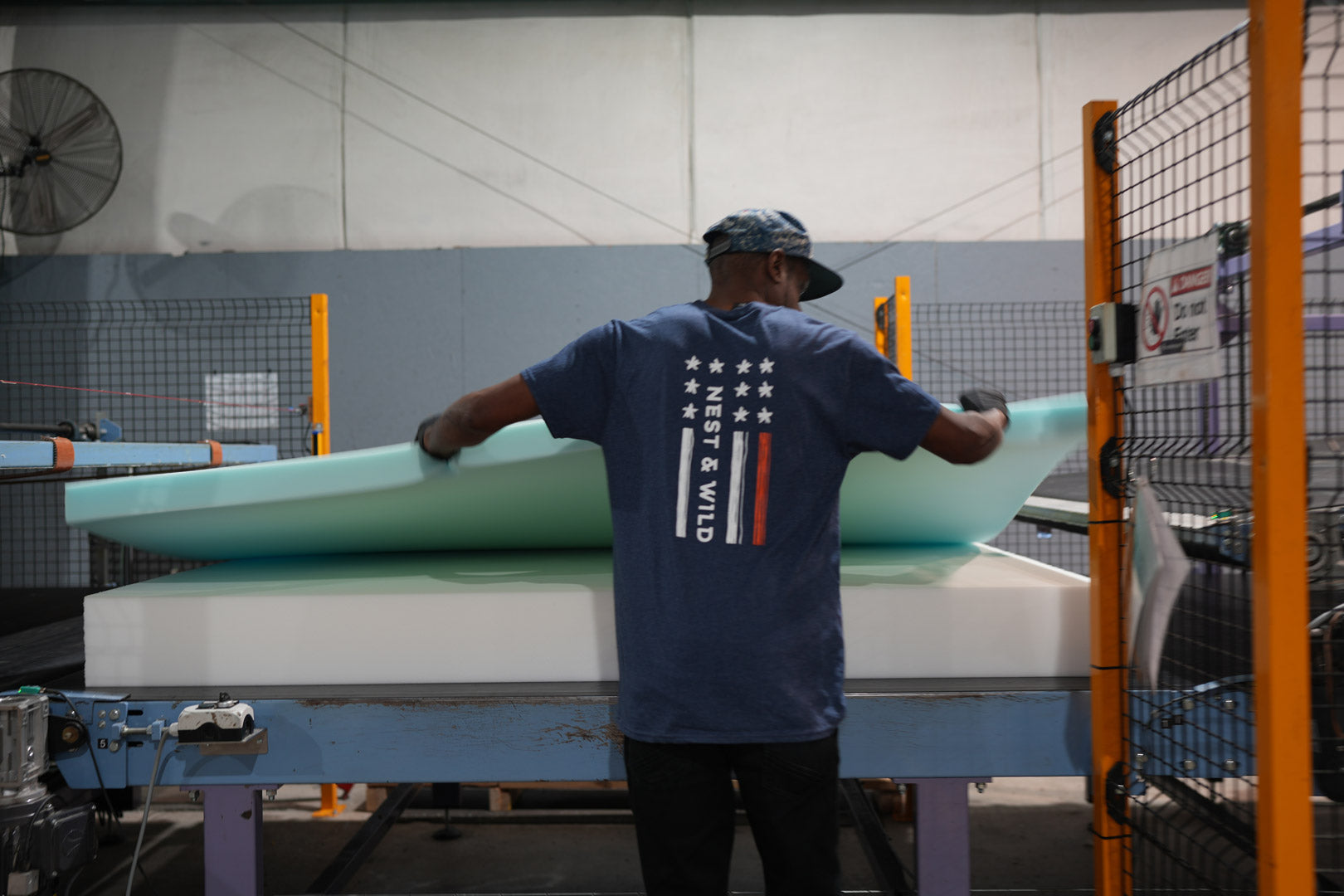
Reputable fiberglass-free and organic brands do exist, so this is genuine guidance rather than a single-brand pitch. Where Nest & Wild fits: every mattress is 100% fiberglass-free, certified with CertiPUR-US foams, GreenGuard Gold glue, and OEKO-TEX, and built in Tupelo, Mississippi—removing the sealed-cover gamble by design instead of hoping the cover never opens. That American-made, family-run construction is the same craftsmanship story behind every stitch.
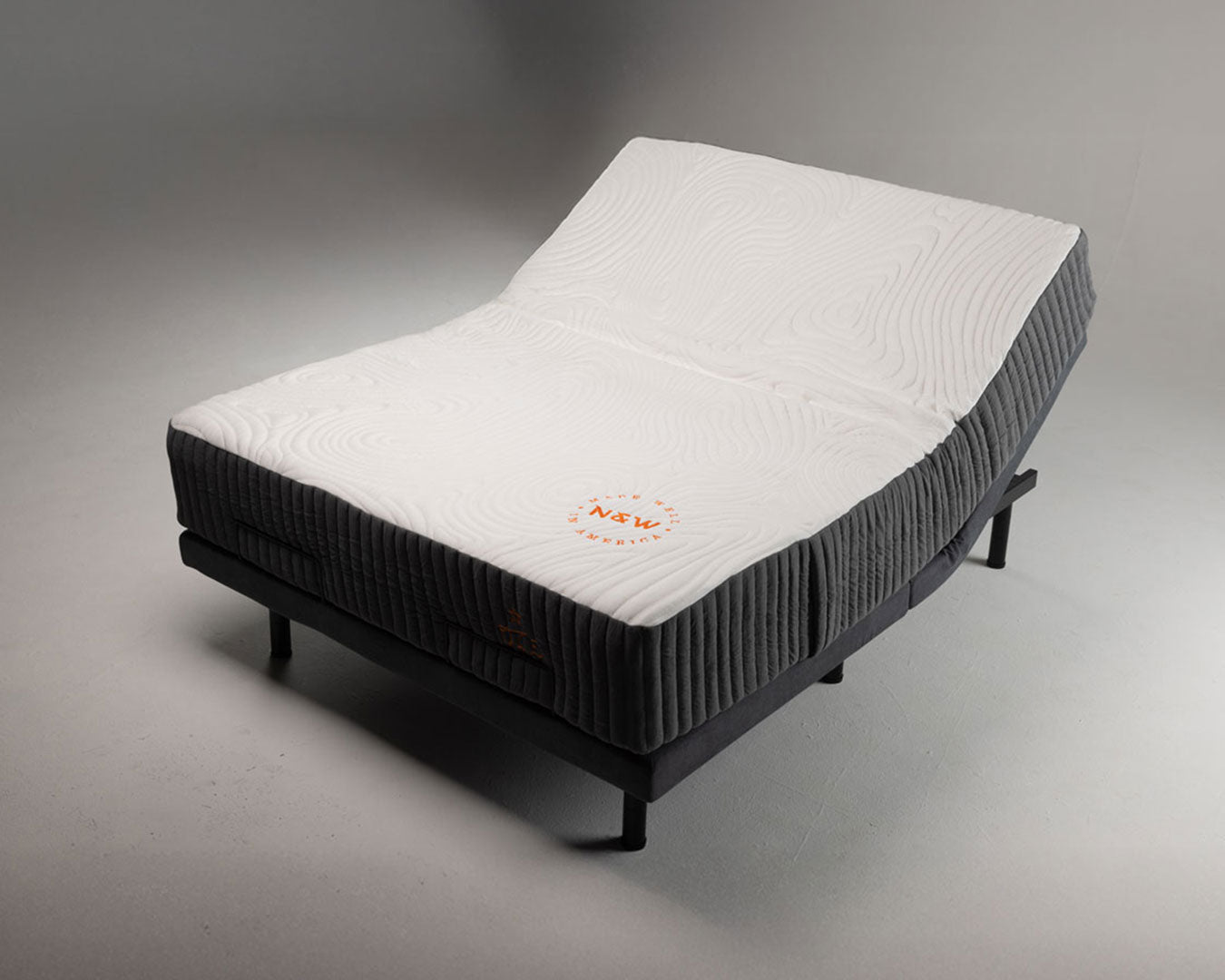
For side sleepers and back-pain readers, the Luxury Hybrid Mattress pairs that fiberglass-free build with hybrid support, and it can be paired with the Adjustable Bed Base for zero-gravity positioning. If you want the same fiberglass-free, triple-certified peace of mind at a more accessible starting point, the Original Mattress is the place to begin.
Frequently asked questions about fiberglass-free mattresses
Is fiberglass in a mattress dangerous if I never remove the cover?
Largely no. As long as the cover stays intact and unzipped, fiberglass stays contained and poses little day-to-day risk. The hazard appears when fibers escape—when a cover is removed, torn, or damaged—because, per the California Department of Public Health, breathing in tiny fiberglass pieces can irritate the nose, throat, and lungs. The catch is that the "never remove the cover" rule is easy to break.
How can I tell if my mattress contains fiberglass without opening it?
Check the law tag and materials list. A "do not remove cover" or "do not unzip" warning is a common signal, and the words "glass fiber" or "glass wool" mean fiberglass under a softer name. Vague fire-barrier language is another red flag. The most reliable step is emailing the manufacturer and asking, in writing, whether the mattress contains fiberglass of any kind.
What should I do if I accidentally removed a fiberglass mattress cover?
Stop disturbing it, leave the room, and limit how far the fibers spread. Fiberglass particles can become airborne and irritate skin, eyes, and airways, so avoid shaking out bedding indoors. Contamination can spread to carpet and HVAC, which sometimes means discarding affected bedding and deep-cleaning. For specific symptoms or exposure questions, contact a resource like Poison Control.
Are memory foam mattresses more likely to contain fiberglass?
Inexpensive memory foam is where fiberglass shows up most often, because it's the lowest-cost way to pass fire tests. But all-foam construction is not proof of fiberglass—many foam mattresses are fiberglass-free. Treat low price plus an all-foam build as a reason to verify, not a verdict. Confirm with certifications and a written answer from the brand.
Why do some manufacturers hide fiberglass under terms like "glass fiber" or "glass wool"?
Because the words sound less alarming than "fiberglass" while describing the same spun-glass material. The label is technically accurate, which lets a brand meet disclosure rules without spotlighting a material shoppers are actively avoiding. Reading "glass fiber" or "glass wool" on a materials list should carry the same weight as reading "fiberglass"—and prompt the same verification questions.
Is a GOTS-certified organic mattress the safest option for avoiding fiberglass?
GOTS is one of the strongest routes, because it prohibits synthetic materials in organic-certified products and is independently audited, so a true GOTS-certified bed won't use fiberglass. It's not the only safe path, though—mattresses certified with CertiPUR-US, GreenGuard Gold, and OEKO-TEX and confirmed fiberglass-free in writing are equally trustworthy. Match the certification to what you most want verified.
The bottom line: is fiberglass-free worth it for you?
For most buyers, yes—because you're buying out of a documented failure mode and the cleanup risk, not chasing a scare. The value is real and honest: no containment gamble, no "never wash your cover" rule, and the freedom to actually clean your bed.
- Parents, allergy- or asthma-prone sleepers, and anyone who'll ever unzip a cover: the premium is clearly worth it—a fiberglass-free build removes the one scenario where harm actually happens.
- Side sleepers and back-pain readers: choose the fiberglass-free, triple-certified Luxury Hybrid Mattress, optionally paired with the Adjustable Bed Base for pressure relief.
- Budget-minded buyers who still want peace of mind: start with the Original Mattress—same fiberglass-free, CertiPUR-US, GreenGuard Gold, and OEKO-TEX standard, built in Tupelo, Mississippi.
- Someone who'll truly never touch the cover and owns a verified fiberglass-free bed already: you can skip the upgrade—just keep that cover intact.