

Best Mattress for Hot Sleepers: What to Look for Before You Buy
If you run hot at night, mattress shopping can feel strangely frustrating. A bed might feel great for five minutes in a showroom, then turn into a heat trap by 2 a.m. once your body settles in. And when that happens, it is not just annoying. Broken, overheated sleep can chip away at how rested, focused, and human you feel the next day.
That is why finding the best mattress for hot sleepers is less about chasing buzzwords and more about understanding how a mattress handles airflow, moisture, pressure relief, and heat buildup over the course of a full night. Your body naturally cools down to help initiate sleep, which is one reason sleep researchers and organizations like the Sleep Foundation and the American Academy of Sleep Medicine keep pointing people toward a cooler sleep environment. If your mattress keeps holding onto heat after your body is trying to let it go, you feel that mismatch fast.
So what should you actually look for? Not gimmicks. Not icy-sounding fabric names with no substance behind them. You want a mattress built to release heat instead of storing it, cushion pressure without swallowing you whole, and stay comfortable long after the first week. Here is how to tell the difference.
Why does the best mattress for hot sleepers start with thermoregulation?
Sleep and temperature are tied together more closely than most people realize. The National Heart, Lung, and Blood Institute notes that poor-quality sleep has real downstream effects on mood, performance, and health, and a growing body of research shows that heat is one of the easiest ways to disrupt it. A 2024 systematic review on ambient heat and sleep found that warmer indoor or outdoor temperatures are generally linked with worse sleep quality and quantity. Earlier research on the temperature dependence of sleep explains why: body cooling is part of the sleep process itself.
In plain English: if your bed keeps heat parked around your body, it can work against the very physiology that is trying to help you fall asleep and stay asleep.
That is also why "cooling" should not be treated as a luxury add-on for hot sleepers. It is a core performance feature. The right mattress should help create a sleep surface that feels breathable, dry, and steady instead of muggy, sticky, or stuffy by the middle of the night.
What mattress materials are actually better for hot sleepers?
When people say a mattress "sleeps hot," they are usually describing one of two things: the material is retaining too much body heat, or the construction is not allowing enough air to move through the bed. The best mattress for hot sleepers solves both problems at once.
- Open, breathable materials: Materials that allow more airflow generally do a better job releasing warmth instead of bottling it up near your torso and hips.
- Responsive comfort layers: If a mattress lets you sink too deeply, more of your body gets wrapped by foam, which can increase heat retention.
- Ventilated or temperature-regulating components: Features like ventilated foams or phase change materials can help smooth out temperature spikes on the surface.
Latex often gets attention here for good reason. Research published in the National Library of Medicine found that latex mattresses can provide more even pressure distribution than polyurethane foam, which matters because good pressure relief helps reduce the constant tossing and repositioning that many hot sleepers know all too well. Latex is also widely valued for being more breathable and less "sink-in" than traditional dense memory foam.
Traditional memory foam, on the other hand, can be the trickiest category for hot sleepers. It can feel wonderfully contouring, but dense foam has a habit of holding onto warmth, especially if the upper layers are not ventilated and the cover is not breathable. That does not mean every foam mattress is automatically out. It means you need to look past the label and into the build.
What should hot sleepers look for in the construction, not just the marketing?
Here is where smart shoppers separate real cooling performance from nice packaging. A mattress can call itself "cooling" all day long, but the details tell the truth.
| Feature | Why it matters for hot sleepers | What to watch out for |
|---|---|---|
| Pocketed coils | Create open space inside the mattress so air can move more freely | Very thin comfort layers on top can reduce pressure relief |
| Ventilated foam | Helps reduce trapped heat compared with dense, unventilated foam blocks | "Cooling foam" language with no mention of ventilation or airflow |
| Phase change materials (PCM) | Can help moderate surface temperature swings, especially early in the night | PCM alone will not fix a poorly ventilated mattress core |
| Breathable cover fabrics | Help release humidity and body heat at the top of the mattress | Thick, synthetic, less breathable covers that trap warmth |
| Balanced support | Keeps you from sinking too far into the bed and creating a heat pocket | Ultra-plush builds that hug deeply without enough lift |
This is one reason hybrid mattresses tend to show up so often in conversations about the best mattress for hot sleepers. Coils naturally create space for airflow inside the mattress, while the upper comfort layers still provide cushioning where you need it. Nest & Wild explains the same idea in its own article on mattress airflow, noting that individually pocketed coils create macro-channels that help with heat dissipation and moisture wicking.
That is the key phrase, really: whole-mattress airflow. Surface cooling matters, but a breathable cover on top of a heat-trapping core is only doing part of the job.
Do cooling technologies actually help, or are they mostly hype?
Some do. Some absolutely get oversold. The trick is knowing what role they are supposed to play.
Take phase change materials, for example. PCM is designed to absorb and release heat as temperatures shift, which can help the mattress surface feel more stable instead of noticeably warming up after you fall asleep. That is useful, especially for people who tend to heat up quickly after getting into bed. But PCM is best thought of as part of a cooling system, not the whole system.
That nuance shows up in newer research, too. In a 2025 study published in PMC, a temperature-controlled mattress cover improved subjective sleep quality, thermal sensation, and comfort, even though objective sleep metrics changed less dramatically. That does not mean temperature tools are fake. It means how you feel through the night matters, and thermal comfort is meaningful even when it does not show up as a giant change in every sleep measurement.
For shoppers, the takeaway is simple: cooling technology works best when it supports a breathable design underneath it. Think of it like this:
- A breathable mattress core helps heat escape.
- A responsive comfort layer helps prevent deep sink and heat buildup.
- A cooling surface treatment helps smooth out that first-contact warmth.
When all three show up together, you are in much better shape than with a mattress that leans on one flashy feature and hopes you do not ask questions.
Is a firmer mattress always better for hot sleepers?
Not always, and this is where a lot of people accidentally buy the wrong bed.
Yes, an ultra-soft mattress can sleep warmer because you sink in more deeply and create more body contact with the material. But going too firm can create its own problem: pressure points. When your shoulders, ribs, or hips are uncomfortable, you move more, wake more, and often feel hotter simply because your sleep is less settled.
A systematic review on mattress characteristics and sleep quality found that medium-firm mattresses tend to hit an especially helpful balance for comfort and spinal support. For hot sleepers, that balance matters. You want enough support to stay lifted and aligned, but enough cushioning to avoid the restless shifting that comes from a surface that feels hard or unforgiving.
In other words, the goal is not "the firmest bed possible." It is a mattress that feels supportive, breathable, and easy to settle into without swallowing you.
Why is a hybrid often the best mattress for hot sleepers?
If you like some contouring but know you do not do well with an all-foam feel, this is usually where a hybrid shines. A well-built hybrid gives you the comfort people like in foam, plus the airflow and lift that coils bring to the table.
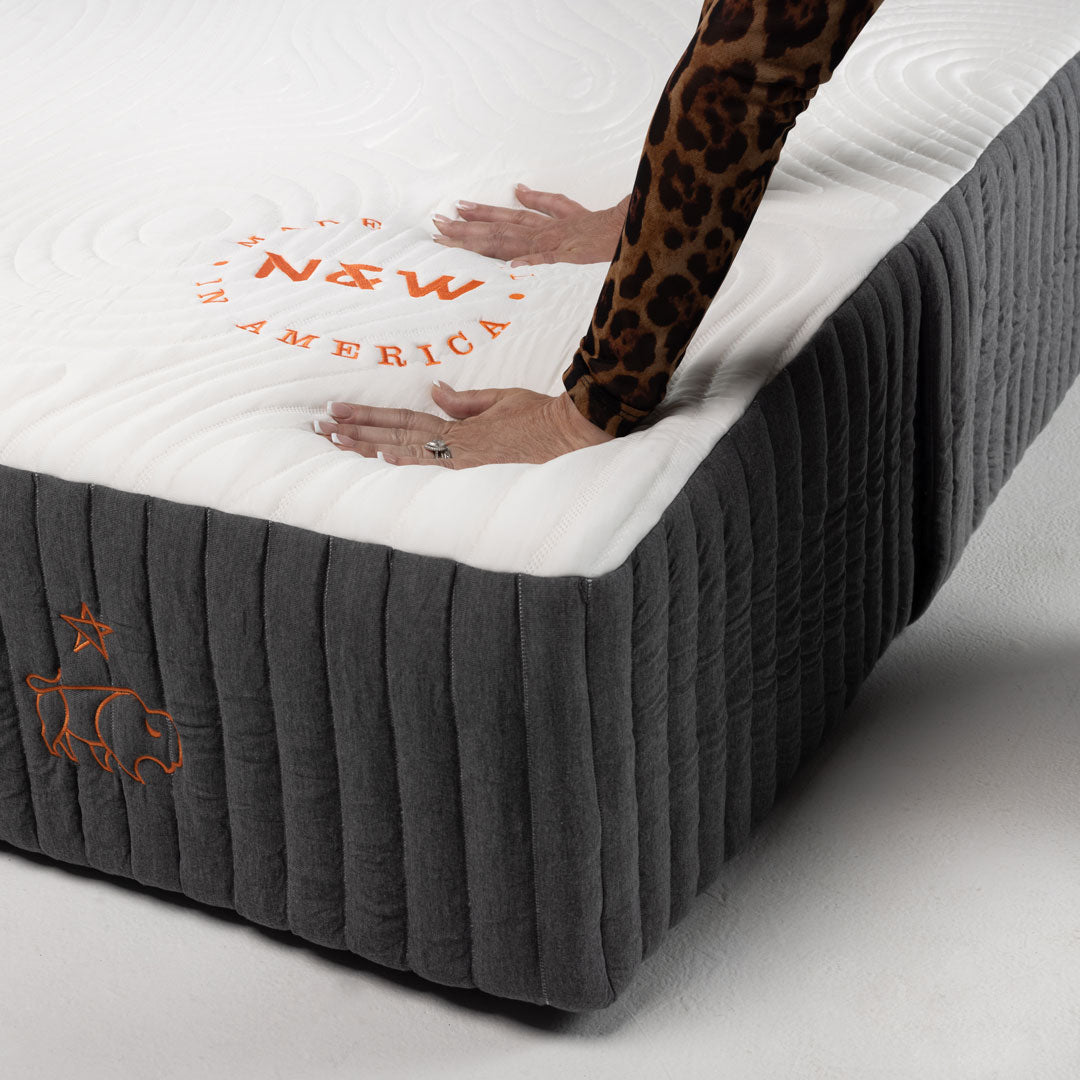
That is also why the Nest & Wild Luxury Hybrid makes sense for this conversation. Nest & Wild describes it as using ventilated high-density foam, PCM cooling technology, and an American-made QuadCoil system, with every layer designed for higher airflow and cooler nights. For a hot sleeper, that combination is not just attractive on paper. It lines up with what the research says matters most: breathability, support, and better temperature moderation across the whole mattress.
- Ventilated foam helps reduce the stale, heat-trapped feel some sleepers get from denser foam builds.
- PCM cooling technology helps address surface-level heat fluctuations.
- Pocketed coil support helps create more airflow and a less enveloping feel.
And there is something else worth saying plainly: hot sleepers usually do not just want a cooler mattress. They want a mattress that still feels good to sleep on. A hybrid is often where that compromise disappears and the bed can be both supportive and breathable instead of forcing you to choose one or the other.
What should you avoid if you are serious about sleeping cooler?
Here is the quick gut-check list to keep in mind while you shop:
- Very dense top layers that let you sink in too far
- Generic "cooling" claims with no mention of airflow, ventilation, coils, or PCM
- Non-breathable covers that feel plush in-store but muggy overnight
- Mattresses that focus on softness first and temperature performance second
- Low-quality foams that may break down faster and lose their supportive lift
Also, remember that your mattress is the center of the sleep setup, but it is not the whole setup. The recommended bedroom range of roughly 65 to 68 degrees Fahrenheit, breathable bedding, and good airflow in the room still matter. A hot mattress can ruin a cool room, but a cool mattress also works best when the rest of the bedroom is not fighting against it.

So, what is the smartest way to choose the best mattress for hot sleepers?
Start by ignoring the gimmicks and asking better questions.
Does the mattress have real internal airflow, or just a cool-touch cover? Does it keep you gently lifted, or let you sink in until you are wrapped in heat? Are the materials there to solve a real problem, or just to sound advanced on a product tag?
If you are shopping for the best mattress for hot sleepers, the strongest bets usually share the same DNA: breathable construction, supportive comfort, responsive materials, and cooling features that make sense together rather than standing alone. For many people, that points straight toward a hybrid.
And if you want a model built around that idea, the Nest & Wild Luxury Hybrid is a strong place to start. It brings together ventilated foam, PCM cooling, and coil-driven airflow in a design that aims to help you sleep cooler without giving up the comfort that made you start shopping in the first place.
Because for a hot sleeper, the right mattress should not feel like a nightly compromise. It should feel like relief.